

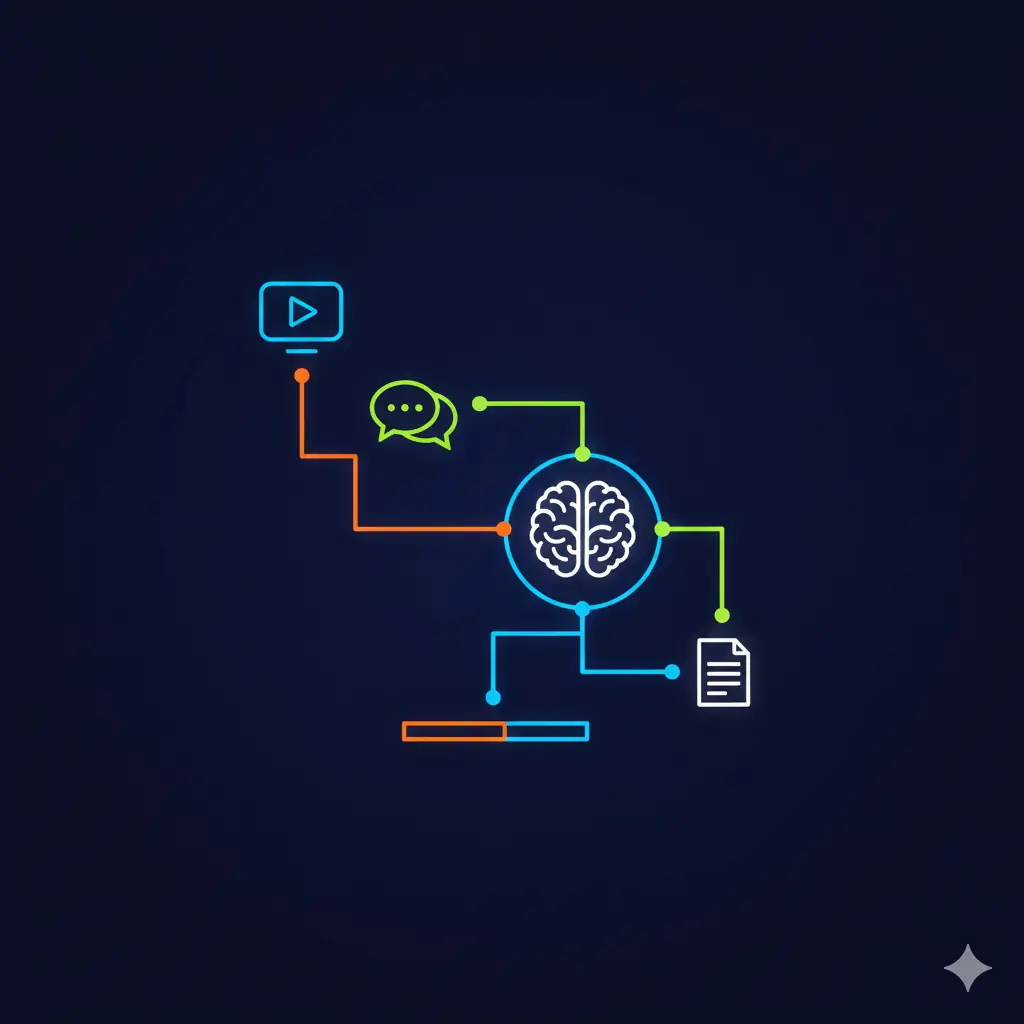
🚀 The Foundation: Starting with Clear Objectives
Designing an online course that truly engages learners begins not with the tools, but with clarity. Before you record a single video or write one slide, you must define the destination for your students.
Ask yourself: What specific skills will students be able to perform by the end of this course? If you can’t answer that precisely, your course will lack focus.
These clear objectives act as a compass, guiding every decision you make about content, activities, and assessment. When the goals are clear, students feel secure and motivated.
For example, instead of a vague goal like ‘understand marketing,’ aim for ‘be able to create and launch an Instagram ad campaign within a set budget.’
🏗️ Structuring for Success: Chunking Your Content
Online learning requires breaking down information into digestible, manageable chunks. Unlike a long, three-hour lecture, digital attention spans thrive on variety and short segments.
Begin by dividing your course into logical modules or units, much like chapters in a book. Each module should focus on achieving one or two specific learning objectives.
Next, break those modules down further into smaller lessons, ideally lasting no more than 5–15 minutes each. This prevents cognitive overload and makes it easier for learners to fit study into busy schedules.
This structure, often called ‘chunking,’ ensures a steady, achievable pace, making the overall course feel less intimidating and much more approachable.
🎬 Embracing Multimedia: The Power of Variety
Engagement often suffers when content relies solely on text. The online environment allows for rich multimedia, and you should use it strategically to keep different parts of the brain active.
Use high-quality video for direct instruction, but keep them short and punchy. Supplement videos with downloadable transcripts, interactive quizzes, and visual aids like infographics.
Remember that variety is the spice of online learning. Alternating between reading articles, watching demonstrations, listening to short podcasts, and completing interactive exercises prevents monotony.
A good course rarely relies on just one format; it weaves together text, audio, and visual elements to cater to diverse learning preferences.
🤝 Fostering Interaction: Building Community
One challenge of online learning is the potential for isolation. An engaging course must be designed to build connection and collaborative interaction among learners.
Incorporate discussion forums that require thoughtful responses, not just simple agreement. Pose open-ended questions that encourage students to apply concepts and share their unique insights.
Group projects, even simple peer-review activities, can create accountability and shared responsibility. When students feel they are part of a community, they are more likely to stay engaged and complete the course.
Consider scheduling live Q&A sessions via video conferencing. Even if they aren’t mandatory, these sessions add a valuable human touch and a sense of real-time presence.
✅ Assessment as a Learning Tool
Assessment in an engaging online course should be continuous, varied, and focused on reinforcing learning, not just assigning a grade. Quizzes should be treated as practice, not just tests.
Use frequent, low-stakes quizzes after each lesson to help students self-check their understanding and recall information immediately. This process aids long-term memory formation.
For major assessments, move beyond multiple-choice exams. Design practical, project-based assignments where students must *apply* the knowledge, such as building a website or analyzing a case study.
The feedback you provide is also critical. Make sure it is timely, specific, and actionable, guiding the student on how they can improve in the next module.
✨ Key Design Tips for Engagement
Beyond the core structure, several small design choices can dramatically improve the learner experience and boost retention.
- Design for Mobile: Ensure all videos, quizzes, and documents are easily viewable and functional on a smartphone or tablet. Many learners study on the go.
- Use Strong Visual Branding: A clean, consistent look and feel throughout the course (colors, fonts, layout) professionalizes the experience and makes navigation intuitive.
- Provide Checklists: Include a checklist at the beginning of each module so learners can visually track their progress and feel a sense of achievement as they mark items complete.
- Include Instructor Presence: Learners connect to people. Use personalized video intros and frequent, encouraging announcements to maintain a supportive instructor presence.
🔮 The Continuous Loop: Review and Iteration
The design process doesn’t end when the course launches. The most successful online courses are those that are constantly reviewed and iterated based on student feedback and performance data.
Use the analytics from your Learning Management System (LMS) to pinpoint ‘drop-off’ spots—where students tend to stop engaging. This pinpoints confusing content or overly long lessons.
Gathering qualitative feedback through mid-course surveys is also invaluable. Ask students what they found most challenging or most rewarding, and make plans to update the content based on their input.
By viewing your online course as a living, evolving document, you ensure it remains relevant, effective, and truly engaging for future cohorts of learners.
