

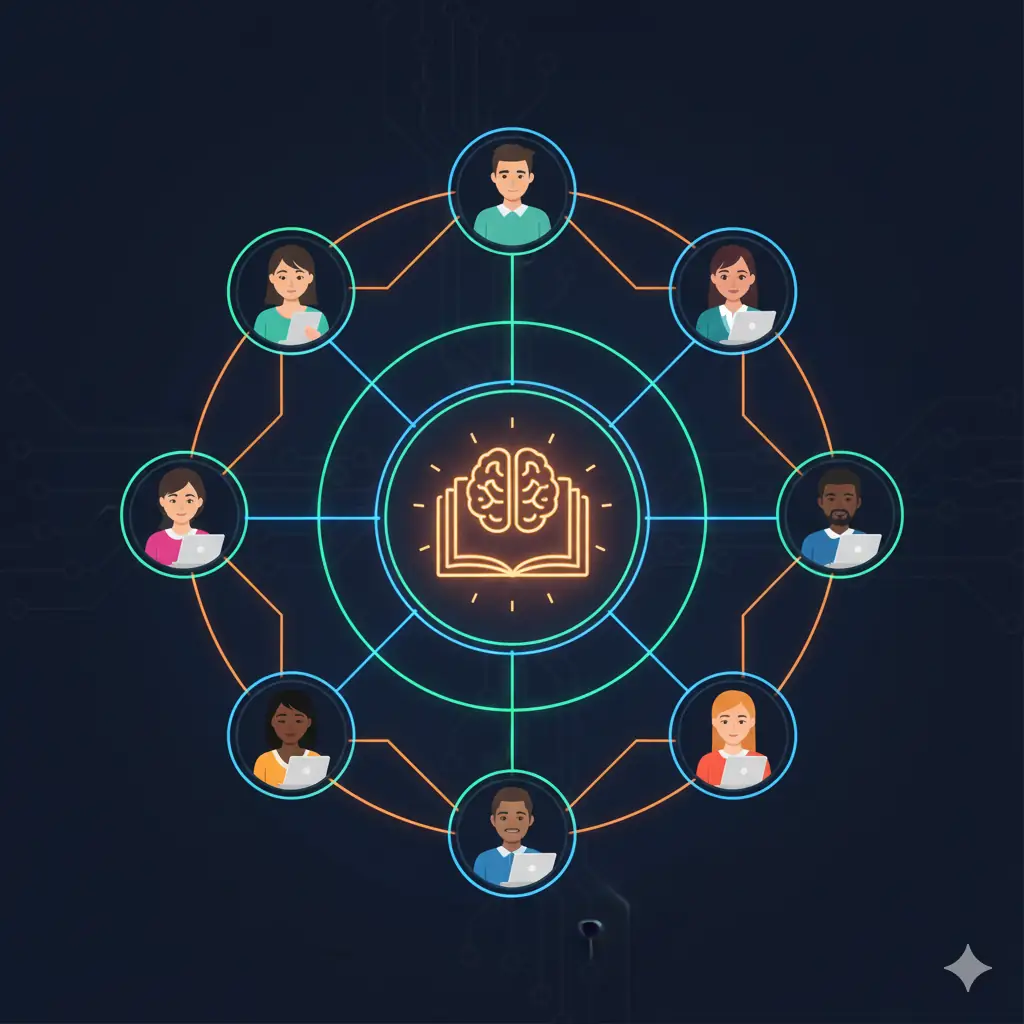
🤝 Beyond Isolation: What Are Online PLCs?
Teaching can sometimes feel like a solitary profession. While you’re surrounded by students, opportunities for deep, continuous collaboration with fellow educators can be limited by schedules and physical distance.
Enter Professional Learning Communities (PLCs) online. These are virtual spaces where educators come together to share expertise, solve common challenges, and collectively enhance their teaching practices. Think of them as digital staff rooms, but with a specific focus on growth.
It’s a structured approach to collaborative professional development, moving beyond one-off workshops to sustained, peer-led learning. The online format amplifies this power, breaking down geographic barriers.
The core idea is simple: when educators learn together, students ultimately benefit from a more informed, cohesive, and effective teaching force.
💡 The Power of Collective Intelligence in the Digital Space
The beauty of an online PLC lies in its ability to harness the collective intelligence of a diverse group of educators. It brings together varied experiences and perspectives into a dynamic learning environment.
Teachers can share successful lesson plans, discuss challenges with specific student populations, or brainstorm innovative solutions for integrating new technology—all within a supportive, virtual network.
This collaborative problem-solving is far more powerful than individual efforts. When one teacher discovers a strategy that works, it can be quickly shared and adapted by many others, leading to widespread improvement.
For example, a high school math teacher struggling with engaging students in geometry might find a new interactive activity shared by a colleague in an online PLC, sparking fresh ideas for their own classroom.
Key Functions of Online PLCs
Online Professional Learning Communities serve several vital functions that contribute to continuous improvement for educators and, by extension, for their students.
- Sharing Best Practices: Facilitating the exchange of effective teaching strategies, resources, and successful classroom management techniques.
- Collaborative Problem Solving: Providing a forum for discussing and collectively addressing challenges related to curriculum, assessment, or student behavior.
- Curriculum Development: Working together to design, refine, and align curriculum content and learning objectives.
- Data Analysis: Collaboratively examining student performance data to identify trends, areas for improvement, and effective interventions.
- Peer Coaching & Feedback: Offering constructive criticism on lesson plans, teaching approaches, or instructional materials.
- Emotional Support: Creating a supportive network where educators can share experiences and reduce feelings of isolation.
🚀 Expanding Reach: Breaking Down Geographic Barriers
One of the most significant advantages of online PLCs is their ability to transcend physical boundaries. This means educators can connect with peers far beyond their own school or district.
A teacher in a rural area might connect with an expert in urban education, or an educator in one country might learn from innovative practices being used on another continent.
This global reach enriches the discussions and introduces diverse perspectives that might never be encountered in a localized professional development setting.
It allows for specialized communities to form around niche topics, such as ‘Teaching AP Physics Online’ or ‘Early Childhood Literacy in Bilingual Settings,’ drawing expertise from across the globe.
🛠️ Tools and Platforms for Online PLCs
The success of online PLCs relies heavily on the digital tools and platforms that host them. These tools must facilitate communication, resource sharing, and collaborative work seamlessly.
Common platforms include dedicated learning management systems (LMS) like Canvas or Google Classroom, specialized educator social networks, or even private groups on platforms like Facebook or Slack.
Features that are crucial for effective online PLCs include discussion forums, file-sharing capabilities, video conferencing for live meetings, and shared document creation tools.
The right platform transforms a disparate group of individuals into a cohesive, interactive learning community.
- Choose the Right Platform: Select a platform that supports discussions, file sharing, and virtual meetings (e.g., Google Classroom, Microsoft Teams, dedicated forums).
- Define Clear Goals: Establish specific objectives for the PLC, such as improving math scores or integrating new EdTech tools.
- Foster Active Participation: Encourage regular contributions through discussion prompts, collaborative tasks, and peer feedback opportunities.
- Designate Facilitators: Have rotating or assigned facilitators to keep discussions on track and ensure equitable participation.
- Celebrate Successes: Acknowledge individual and collective achievements to maintain motivation and a positive learning environment.
🔮 The Future: Dynamic and Integrated Professional Growth
As education continues its digital transformation, online Professional Learning Communities will become an even more integrated and indispensable part of continuous educator development.
We can expect these communities to become more adaptive, perhaps even using AI to suggest relevant resources or connect educators based on their specific needs and challenges.
The line between formal professional development and informal peer learning will blur, creating a fluid and responsive ecosystem for teacher growth.
Ultimately, online PLCs are not just a trend; they are a powerful model for ensuring that educators remain connected, continuously learn, and are supported in their vital work of shaping future generations.
