

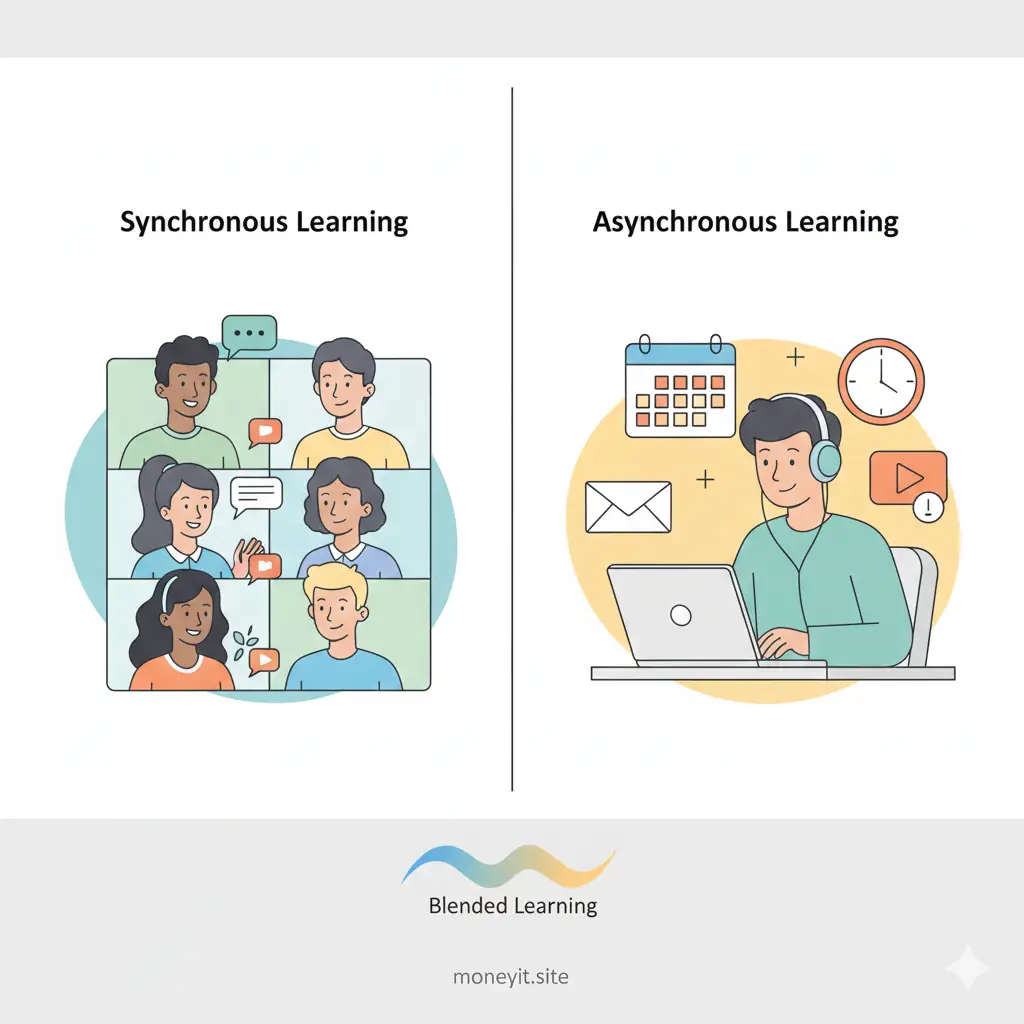
⏰ The Two Rhythms of Online Education
When you hear about online learning, it often sounds like one broad category. However, there are actually two distinct rhythms that define how courses are delivered: synchronous and asynchronous learning.
Understanding the difference between these two modes is crucial, as each offers unique advantages and challenges. The best choice often depends on your learning style, schedule, and personal preferences.
Think of it like attending a live concert versus listening to a recorded album. Both provide music, but the experience and interaction are fundamentally different.
Let’s dive into each model to fully explore what they mean for your educational journey.
🗣️ Synchronous Learning: Real-Time Connection
Synchronous learning refers to any educational experience where students and instructors interact at the same time, in real-time. This mirrors the traditional classroom experience, but in a virtual space.
Imagine a live video conference lecture where you can ask your professor questions and chat with classmates instantly. That’s synchronous learning in action.
Common synchronous activities include live online lectures (often via Zoom or Google Meet), immediate chat discussions, and real-time collaborative work on shared documents.
The defining characteristic is the shared moment in time, fostering a sense of immediate community and direct interaction.
Pros of Synchronous Learning
- Immediate Feedback: Get answers to your questions instantly during live sessions.
- Higher Engagement: Live interaction can feel more dynamic and keep you actively involved.
- Sense of Community: Real-time discussions foster a stronger connection with peers and instructors.
- Structured Schedule: Fixed class times help maintain discipline and prevent procrastination.
- Real-time Collaboration: Ideal for group work that requires immediate input and discussion.
Cons of Synchronous Learning
- Scheduling Challenges: Requires everyone to be available at specific times, which can be difficult across different time zones or for those with tight schedules.
- Technical Issues: Relies on stable internet connection and functioning equipment for all participants; technical glitches can disrupt learning.
- Less Flexibility: Missing a live session often means missing key information or needing to catch up later, if a recording is available.
- Pacing Constraints: The pace of discussion or lecture might not suit everyone’s individual learning speed.
🗓️ Asynchronous Learning: Learn on Your Schedule
Asynchronous learning, by contrast, is a more flexible approach where students engage with course materials and interact with instructors and peers at different times, at their own convenience.
Think of it as having access to all your course materials—recorded lectures, readings, quizzes—which you can complete at any point before a deadline.
Activities include watching pre-recorded video lectures, participating in online discussion forums (where responses are posted over time), completing self-paced modules, and submitting assignments electronically.
The key here is freedom: freedom to choose when and where you learn, fitting education around your life rather than vice-versa.
Pros of Asynchronous Learning
- Ultimate Flexibility: Learn at any time, from any location, fitting studies around work, family, or other commitments.
- Self-Paced: Take as much time as you need to understand complex topics, or move quickly through familiar material.
- Thoughtful Responses: Discussion forums allow for more reflective and detailed contributions, as you have time to compose your thoughts.
- Accessibility: Benefits students in different time zones, those with disabilities, or individuals with unpredictable schedules.
- Reviewability: All content, like recorded lectures, can be reviewed multiple times as needed for better comprehension.
Cons of Asynchronous Learning
- Requires Self-Discipline: Without fixed schedules, it’s easier to procrastinate and fall behind.
- Less Immediate Feedback: Questions might not be answered instantly; there’s usually a delay in responses from instructors or peers.
- Potential for Isolation: Less real-time interaction can sometimes lead to a feeling of disconnection from the learning community.
- Technical Competence: Learners need to be comfortable navigating online platforms independently.
| Feature | Synchronous Learning | Asynchronous Learning |
|---|---|---|
| Time Constraint | Fixed, real-time schedule | Flexible, self-paced |
| Interaction | Immediate, live | Delayed, reflective |
| Tools Used | Live video calls, chat | Recorded lectures, forums, email |
| Community Feel | Stronger, immediate connection | More independent, community built over time |
🔮 Finding Your Best Fit: Blended Learning
Often, the most effective approach combines elements of both synchronous and asynchronous learning—this is known as blended learning. Many courses now offer a mix to get the best of both worlds.
For example, a course might have pre-recorded lectures (asynchronous) for foundational content, but then include weekly live Q&A sessions (synchronous) or collaborative project work.
This hybrid model allows students to benefit from the flexibility of self-paced learning while still experiencing the valuable direct interaction and community building of real-time sessions.
When choosing an online course, consider which blend will best support your learning style and life circumstances. Both synchronous and asynchronous learning offer powerful paths to knowledge.
