

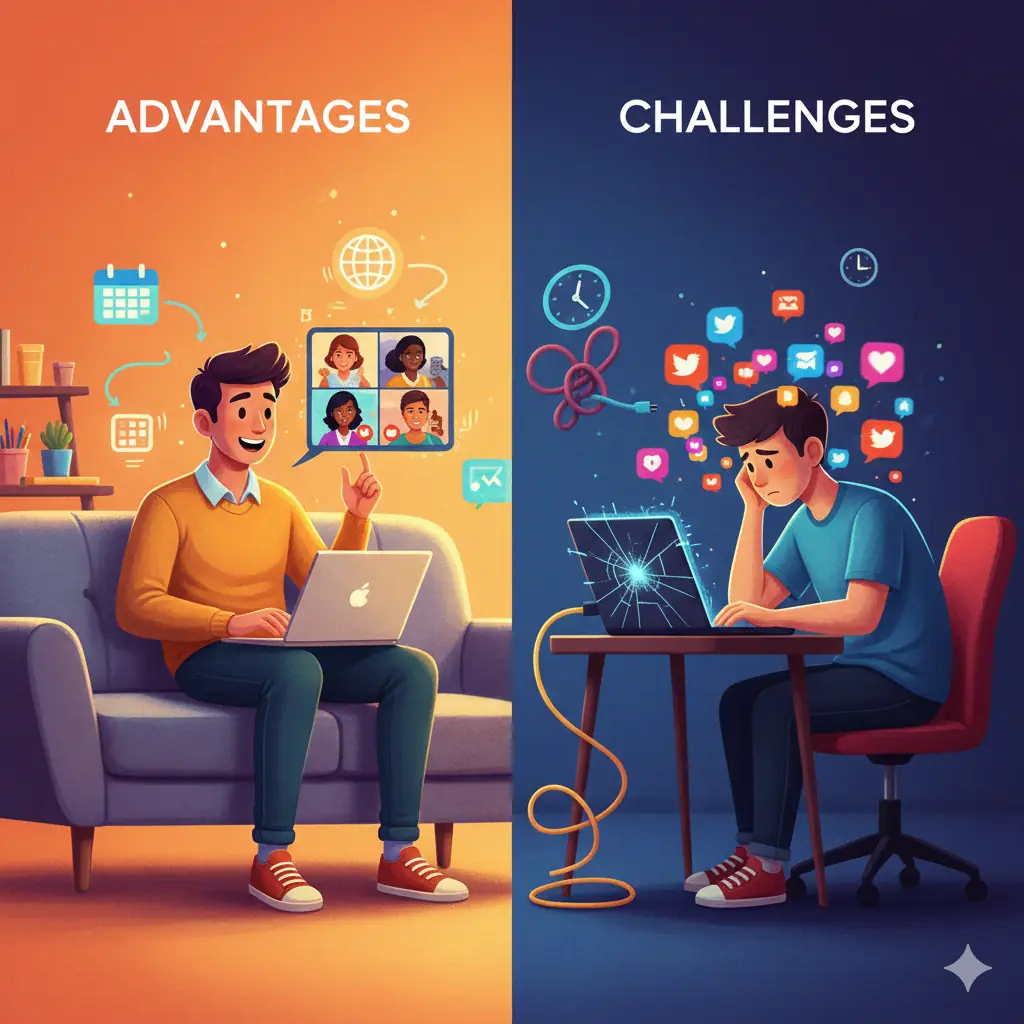
💻 The Digital Shift: A New Way to Learn
Online learning has rapidly transformed from a niche option to a mainstream educational pathway. Whether driven by necessity or choice, millions of students worldwide now engage with virtual classrooms.
This shift brings with it a unique set of opportunities and obstacles. Understanding both the upsides and the potential pitfalls is crucial for anyone considering or currently engaged in online study.
It’s like moving to a new city; you gain new freedoms and experiences, but also encounter unfamiliar challenges that require adaptation and strategy.
Let’s dive into the core advantages and challenges to help you navigate the world of online education effectively.
🌟 Advantages of Online Learning
The flexibility and accessibility of online learning are its most celebrated features, opening doors to education for individuals who might otherwise be excluded from traditional schooling.
1. Unmatched Flexibility and Convenience
One of the biggest draws of online learning is the ability to set your own schedule. This is a game-changer for working professionals, parents, or those with unpredictable commitments.
You can often access course materials, lectures, and assignments at any time that suits you, whether that’s early morning, late at night, or during a lunch break.
This autonomy allows you to integrate education seamlessly into your life, rather than having to significantly rearrange your life around a fixed class schedule.
It means education becomes a tool that adapts to you, rather than you adapting to it.
2. Global Access to Diverse Education
Online learning breaks down geographical barriers, providing access to institutions and specialized courses that might be thousands of miles away from your physical location.
A student in a small town can now pursue a degree from a prestigious university in another country, enriching their learning experience with diverse perspectives and expert faculty.
This global reach also fosters diverse online communities, allowing students to collaborate and learn from peers from various cultural and professional backgrounds.
It truly makes education a global village, where knowledge knows no borders.
3. Cost-Effectiveness
While tuition fees still apply, online learning can significantly reduce the overall cost of education. You save on expenses like commuting, housing, and sometimes even textbooks if digital versions are used.
Many online programs also offer more affordable tuition rates compared to their on-campus counterparts, as institutions have lower overheads without extensive physical infrastructure.
This makes higher education more financially accessible, reducing the debt burden for many students.
It’s an investment that often comes with a more manageable price tag.
4. Personalized Learning Pace
Many online courses, particularly asynchronous ones, allow students to move at their own pace. This is incredibly beneficial for different learning styles and speeds.
If you need extra time to grasp a complex concept, you can rewatch lectures or spend more time on practice exercises without feeling rushed. Conversely, if you’re a quick learner, you can accelerate through familiar material.
This personalized pacing prevents both frustration for struggling students and boredom for advanced learners, optimizing the learning experience for everyone.
It acknowledges that not all brains learn at the same speed, and that’s perfectly fine.
⛔ Challenges of Online Learning
Despite its many benefits, online learning isn’t without its hurdles. Being aware of these challenges is the first step toward overcoming them and ensuring a successful online journey.
1. Requires Strong Self-Discipline and Time Management
The freedom of online learning is also its biggest challenge. Without fixed class times and physical proximity to instructors, it’s easy to procrastinate and fall behind.
Students must be highly self-motivated and possess excellent time management skills to stay on track. It requires actively scheduling study time and adhering to it.
This is often a steep learning curve for students accustomed to the external structure of traditional schooling. It demands a new level of personal accountability.
💡 Quick Insight: Treat online learning like a job – set hours, clear goals, and regular check-ins with yourself to maintain momentum.
2. Digital Distractions and Isolation
When your classroom is on a device connected to the internet, distractions are constantly a click away. Social media, streaming services, and personal notifications can easily derail focus.
Additionally, while online platforms offer interaction, some students may experience feelings of isolation due to less face-to-face contact with peers and instructors.
Counteracting these requires proactive strategies, such as setting up a dedicated study space, using website blockers, and actively participating in online discussion forums and virtual group activities.
Building connections in the digital realm requires intentional effort.
3. Technical Hurdles and Digital Divide
Reliable internet access and functioning devices are non-negotiable for online learning. Technical glitches—slow Wi-Fi, software issues—can disrupt learning and cause significant frustration.
Furthermore, the ‘digital divide’ remains a challenge, with not all students having equitable access to the necessary technology or consistent, high-speed internet.
Institutions often provide support, but students must be prepared to troubleshoot basic technical issues or seek assistance promptly when needed.
It’s essential to have a stable digital foundation to succeed.
| Feature | Advantages | Challenges |
|---|---|---|
| Schedule | Flexible, self-paced | Requires self-discipline |
| Access | Global, diverse programs | Digital divide, technical issues |
| Cost | Lower overall expenses | Initial tech investment |
| Interaction | Varied digital tools | Potential for isolation, delayed feedback |
🔮 Navigating the Virtual Landscape
Online learning is a powerful tool, but like any tool, its effectiveness depends on how it’s used. By understanding its inherent advantages, you can leverage them to your benefit.
And by recognizing the common challenges, you can proactively develop strategies to mitigate them, transforming potential stumbling blocks into opportunities for growth.
Embrace the journey with an open mind and a strategic approach, and online learning can be an incredibly rewarding and transformative experience for your education and career.
