

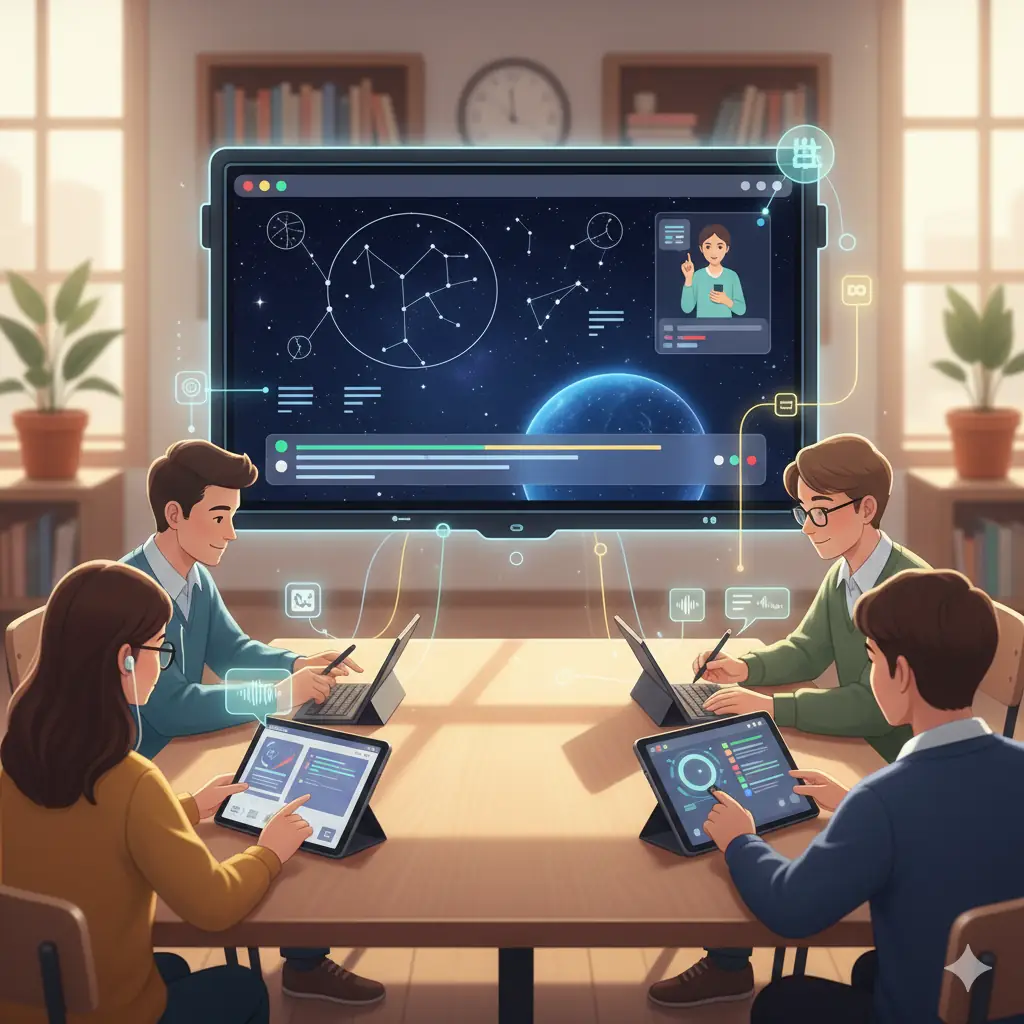
💖 Building a Classroom Without Barriers
The goal of inclusive education is simple yet profound: to ensure every student, regardless of their individual needs, learning styles, or physical challenges, has equitable access to quality education. Historically, achieving this goal in a standardized classroom has been incredibly difficult.
Fortunately, technology has emerged as one of the most powerful tools for dismantling these traditional barriers. It moves beyond a one-size-fits-all approach to offer personalized, adaptive, and highly flexible solutions.
Technology transforms static content into dynamic resources that can be tailored to individual requirements, making the curriculum accessible rather than restrictive.
Let’s look at the specific ways modern educational technology (EdTech) is creating truly inclusive learning environments.
🗣️ Breaking Down Communication Barriers
For students with hearing or speech impairments, technology provides essential tools that translate spoken language into accessible formats, ensuring full participation in class discussions.
Real-time captioning and automatic transcription services, integrated into video conferencing platforms like Zoom or Teams, provide instant text versions of spoken lectures and conversations.
Furthermore, text-to-speech (TTS) software allows students who struggle with reading or dyslexia to hear digital text read aloud, aiding comprehension and reducing reading fatigue.
Conversely, speech-to-text tools enable students who struggle with writing or typing to dictate their answers, essays, or code directly into a document, bypassing physical barriers to expression.
These tools ensure that the method of delivery doesn’t become an obstacle to learning.
Tailoring Content for Diverse Sensory Needs
Technology allows educators to easily modify how content is perceived, catering to diverse sensory and cognitive needs within the same learning environment.
For students with visual impairments, digital materials can be instantly magnified, adjusted for color contrast, or seamlessly integrated with screen readers.
Many digital learning platforms allow students to customize the display—choosing specific fonts (like dyslexia-friendly fonts), background colors, and text sizes—giving them agency over their learning environment.
This level of customization means that the same lesson can be experienced by different students in the format that works best for their individual brains.
✨ Key Insight: In inclusive education, technology provides the essential ‘ramp’ that allows learners to bypass physical or cognitive obstacles to reach the same curriculum destination.
🧠 Personalized Pace and Adaptive Systems
Inclusion isn’t just about access; it’s about providing the right instructional support at the right pace. Adaptive learning systems are transforming this aspect of educational support.
These AI-powered systems can recognize when a student is struggling and automatically offer targeted review, remedial practice, or alternative explanations without requiring teacher intervention.
For students who need more time to process information, the ability to pause, rewatch a video lecture, or repeat a module without holding back the class is immensely valuable.
This personalization ensures that students with learning differences receive the scaffolding they need to stay engaged and achieve mastery at a pace that is challenging yet sustainable.
A student with Attention Deficit Hyperactivity Disorder (ADHD) might benefit from a program that breaks tasks into small, structured micro-lessons, complete with visual progress trackers.
👩🏫 Empowering Educators with Data
Technology also supports inclusion by empowering educators with data they can use to make informed decisions about personalized support and interventions.
Learning analytics tools track engagement, performance trends, and resource utilization, providing teachers with a clear, objective picture of a student’s progress.
Teachers can instantly see which specific concepts are causing difficulty for individual students and adjust their teaching or recommend targeted resources, optimizing their use of one-on-one time.
This allows for highly effective, evidence-based intervention strategies that replace generalized efforts with precise, individualized action plans.
📝 Collaboration and Social Inclusion
Finally, digital tools foster social inclusion by facilitating equitable collaboration among all students, regardless of their physical or communication limitations.
Shared digital whiteboards, collaborative cloud documents, and structured discussion forums allow students to contribute to group projects in ways that accommodate their strengths.
A non-verbal student can use a text-to-speech tool to contribute complex ideas to a group document, and their contribution is valued equally alongside spoken input.
This ensures that all voices are heard and valued, fostering a sense of belonging and truly modeling social inclusion within the academic setting.
🌱 The Future of Inclusive Learning
As technology becomes more sophisticated, we can expect even more powerful assistive tools—from advanced biometric feedback systems to highly intuitive voice and gesture controls.
The goal is to move beyond simply adapting content to designing learning environments that are inherently accessible to the widest possible range of human variability from the start.
Technology is, therefore, not just a temporary fix for inclusion, but the core engine driving a long-term, systemic transformation toward a truly equitable and barrier-free educational future.
