

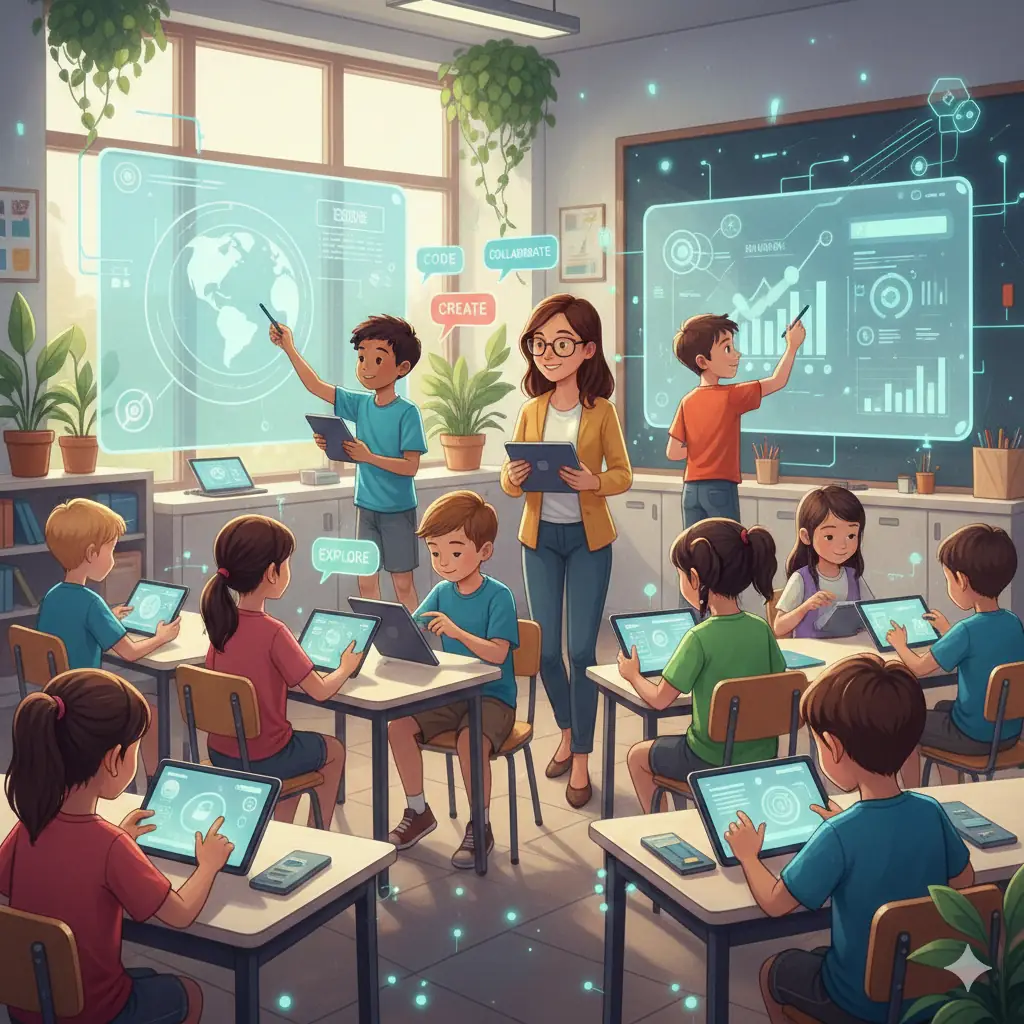
Introduction: The Dawn of a New Educational Era
It wasn’t that long ago that classrooms looked pretty much the same as they had for decades: blackboards, textbooks, and lectures. While these traditional methods certainly have their place, the world around us has transformed dramatically. And with it, our classrooms are experiencing a profound shift – thanks to digital transformation.
Think about it like this: just as smartphones changed how we communicate, digital tools are now reshaping how we learn and teach. This isn’t just about adding a computer here and there; it’s about a fundamental reimagining of the entire educational experience, making it more dynamic, accessible, and personalized than ever before.
The Core Pillars of Digital Transformation in Education
1. Personalized Learning Paths
One of the most exciting aspects of digital transformation is its ability to tailor education to individual students. No two learners are exactly alike; some grasp concepts quickly, while others need more time or different explanations. Digital platforms can now adapt to these unique needs.
Imagine a student struggling with algebra. Instead of falling behind, a learning management system (LMS) can identify their weak spots and provide additional practice, tutorials, or even games focused specifically on those areas. This bespoke approach ensures no one is left behind and everyone can progress at their optimal pace.
2. Enhanced Access and Global Reach
Geography and physical constraints used to be major barriers to education. If you couldn’t be in the classroom, you missed out. Digital transformation has shattered these barriers, opening up learning opportunities to a global audience.
Online courses, virtual classrooms, and remote learning tools mean that quality education is no longer confined to a physical building. A student in a rural area can now access courses from a top university, or collaborate on projects with peers from different continents, broadening their perspectives immensely.
3. Collaborative and Interactive Environments
Gone are the days when learning was solely a solitary endeavor. Digital tools foster incredibly rich collaborative environments, encouraging students to work together, share ideas, and build knowledge collectively.
Platforms like Google Workspace, Microsoft Teams, or specialized educational software allow students to co-create documents, present projects virtually, and engage in real-time discussions, mimicking the collaborative nature of modern workplaces. This prepares them not just academically, but professionally too.
4. Data-Driven Insights for Educators
With digital tools, teachers gain unprecedented insights into student performance and engagement. This isn’t about surveillance, but about understanding where students are thriving and where they might need a little extra help.
Learning analytics can show a teacher which concepts an entire class is struggling with, or which individual student is consistently excelling. This data empowers educators to adjust their teaching strategies on the fly, making their instruction more effective and targeted.
Practical Applications in Today’s Classrooms
So, what does this look like in practice? It’s more than just replacing textbooks with e-readers. It’s about integrating technology seamlessly into the learning process.
Virtual Reality (VR) and Augmented Reality (AR)
Imagine dissecting a frog without any actual frogs, or exploring ancient Rome from your desk. VR and AR are making this a reality. These technologies create immersive experiences that bring abstract concepts to life, making learning incredibly engaging and memorable.
For instance, medical students can practice complex surgeries in a VR environment, making mistakes without real-world consequences, before ever touching a patient.
Gamification of Learning
Making learning feel like a game can dramatically increase engagement. Educational apps and platforms often incorporate game-like elements – points, badges, leaderboards – to motivate students and make challenging subjects more fun.
This approach taps into natural human tendencies for competition and achievement, transforming mundane tasks into exciting challenges that students are eager to tackle. Duolingo, for language learning, is a prime example of successful gamification.
Digital Content Creation
Students are no longer just consumers of information; they are creators. Digital tools enable them to produce podcasts, videos, websites, and interactive presentations, fostering creativity and critical thinking skills essential for the 21st century.
This shift from passive reception to active creation empowers students to demonstrate their understanding in diverse and innovative ways, moving beyond traditional essays and exams.
Case Example: The Flipped Classroom Model
One powerful example of digital transformation is the ‘flipped classroom’. Here, students watch lectures or consume core content (often videos or interactive modules) at home. Class time is then dedicated to discussions, problem-solving, and hands-on activities, with the teacher acting as a facilitator rather than a lecturer.
This model leverages digital resources to deliver foundational knowledge, freeing up valuable in-person time for deeper engagement and personalized support. Students arrive in class prepared to apply what they’ve learned, making classroom sessions more productive and interactive. This dramatically shifts the role of the teacher from a ‘sage on the stage’ to a ‘guide on the side.’
The Benefits and Challenges Ahead
The benefits of digital transformation in education are clear: increased engagement, personalized learning, greater access, and better preparation for a digital world. Students develop crucial digital literacy skills that are indispensable in almost every career path today.
However, it’s not without its challenges. Issues like digital divide (unequal access to technology), ensuring equitable training for educators, and safeguarding student data are critical considerations. It requires careful planning, robust infrastructure, and continuous support to truly unlock its potential.
Looking Forward: The Future Classroom
As we move further into this digital age, classrooms will continue to evolve. We’ll likely see even more integration of AI-powered tutors, sophisticated adaptive learning systems, and virtual collaboration spaces that feel almost indistinguishable from physical ones.
The goal isn’t to replace teachers with technology, but to empower them with tools that enhance their abilities and free them to focus on the human elements of teaching: mentorship, inspiration, and fostering critical thinking. The modern classroom is becoming a dynamic hub where technology and human connection combine to create truly transformative learning experiences.
The table below summarizes some key shifts:
| Traditional Classroom | Digitally Transformed Classroom |
|---|---|
| Fixed Pace Learning | Personalized Learning Paths |
| Teacher-Centric Instruction | Student-Centric Exploration |
| Limited Access | Global Access & Collaboration |
| Passive Content Consumption | Active Content Creation |
| Physical Textbooks | Dynamic Digital Resources |
Conclusion: Embracing the Digital Shift
Digital transformation isn’t just a trend; it’s a fundamental shift in how we approach education. It’s equipping students with the skills they need for a rapidly changing world, making learning more engaging, accessible, and tailored to individual needs. As an experienced online publisher, we at moneyit.site believe this evolution is not only exciting but essential.
Embracing these changes thoughtfully and strategically will ensure that modern classrooms continue to be vibrant spaces of discovery and growth. The future of education is here, and it’s wonderfully digital.
