

🔄 The New Normal: Learning Never Stops
In the past, education often followed a linear path: go to school, get a degree, and then enter a career for life. That model is rapidly changing. Today’s world demands lifelong learning—a continuous, self-motivated pursuit of knowledge for personal or professional growth.
Rapid technological advancements, evolving job markets, and complex global challenges mean that skills quickly become outdated. What you learn today might need an update in just a few years.
This shift means that traditional schools, from K-12 to universities, must adapt their structures and offerings to support individuals not just in their youth, but throughout their entire lives.
Let’s explore how educational institutions are transforming to meet the needs of this new era of continuous learning.
📚 From Degrees to Skills: Embracing Competency-Based Learning
Traditional education often focuses on awarding degrees based on credit hours completed. The lifelong learning trend, however, emphasizes competency and skills. People need to acquire specific, demonstrable abilities to adapt to new job roles.
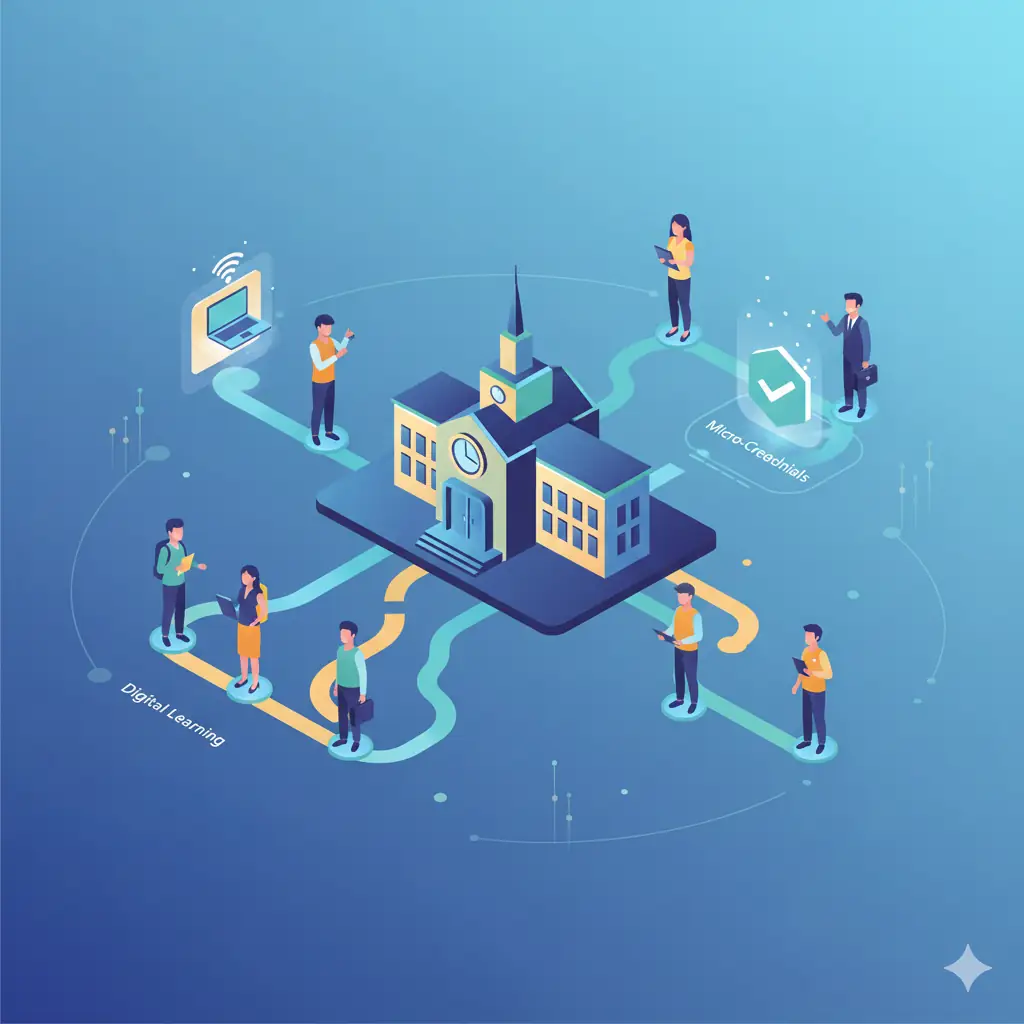
Schools are shifting towards offering more modular, skill-based programs. Instead of a full four-year degree, a university might offer a ‘micro-credential’ or ‘nanodegree’ in a specific, in-demand skill like data analytics or digital marketing.
These shorter, focused programs allow individuals to upskill or reskill quickly, staying relevant in a fast-paced economy without committing to another multi-year degree.
This flexible approach caters directly to working professionals needing targeted, efficient learning opportunities.
Flexible Pathways and Hybrid Models
Lifelong learners often juggle jobs, family, and other commitments. Therefore, schools are increasingly offering flexible learning pathways that accommodate diverse schedules and locations.
This includes robust online courses, hybrid programs that blend online and in-person learning, and asynchronous options that allow students to learn at their own pace, anytime, anywhere.
For example, a community college might offer an evening certificate program in cybersecurity that is entirely online, allowing working adults to gain new skills without disrupting their employment.
Such flexibility removes significant barriers to continuing education, making learning accessible to a much broader population.
🤝 Partnerships with Industry and Employers
To ensure that education remains relevant to the evolving job market, schools are forging stronger partnerships with industry. This collaboration ensures curricula are directly aligned with employer needs.
Universities might co-design courses with tech companies to train students in specific software or skills immediately applicable to a job. This ensures a clear pathway from learning to employment.
These partnerships can also lead to apprenticeship programs, internships, and opportunities for continuous professional development that are directly funded or supported by employers.
It’s a win-win: schools produce job-ready graduates, and industries gain a pipeline of skilled talent.
Roadmap for Adapting to Lifelong Learning
- Curriculum Modularization: Break down large degrees into smaller, stackable micro-credentials.
- Flexible Delivery: Expand online, hybrid, and asynchronous learning options.
- Industry Collaboration: Partner with businesses to ensure skill relevance and job placement.
- Personalized Learning Support: Use technology to offer tailored guidance and adaptive content.
- Alumni Engagement: Provide continuing education opportunities and resources to former students.
- Credentialing Innovation: Explore blockchain for secure, verifiable digital credentials and skill badges.
💡 Personalized Learning and Adaptive Technologies
Lifelong learning is highly individualized. People come with diverse prior experiences and learning gaps. Schools are leveraging educational technology to provide truly personalized learning experiences.
Adaptive learning platforms can assess a learner’s existing knowledge and then tailor content, exercises, and feedback to their specific needs, ensuring efficient and targeted learning.
AI-powered tutors can provide 24/7 support, answering questions and guiding students through challenging concepts at their own pace, outside of traditional classroom hours.
This bespoke approach empowers individuals to focus on what they need to learn most, optimizing their time and effort for maximum impact.
🌟 The School as a Lifelong Learning Hub
Ultimately, schools are transforming from institutions primarily serving young students to lifelong learning hubs for entire communities. They are becoming centers for continuous growth, reskilling, and upskilling for all ages.
This means offering not just traditional degrees, but also community workshops, executive education programs, and access to digital learning resources for alumni and local residents.
The role of the school expands to become a dynamic resource for economic development and personal enrichment throughout an individual’s entire life cycle.
By embracing these trends, schools can remain relevant and indispensable, helping individuals navigate the complexities of a constantly changing world through continuous learning.
